The truth about folic acid: What every pregnant woman should know

Folic acid is an important nutrient for everyone. It also helps your baby’s brain and spine develop properly, and it’s also great for your own health. But, did you know that taking too much folic acid can sometimes cause problems? Let’s break it down in a simple way.
What is Folic acid, and why do you need it?
Folic acid is a synthetic (man-made) form of folate, vitamin B9. Your body needs folate to make healthy red blood cells, repair DNA, and grow new cells. Folate is essential because it helps prevent neural tube defects (NTDs), which are serious birth defects of the baby’s brain and spine.

The recommended dose
The World Health Organization (WHO) recommends that pregnant women take 400–600 micrograms (mcg) of folic acid daily. Starting a supplement at least one month before pregnancy and continuing through the first trimester is especially important.
The Thai Ministry of Public Health advises a daily intake of 600 micrograms (mcg) of folate starting 3 months before pregnancy and continuing through the first 3 months of pregnancy to support the baby’s development.
The problem with too much folic acid
While folic acid is important, taking too much can lead to a condition called unmetabolized folic acid. This happens when your body can’t fully process the synthetic form of folate. Unmetabolized folic acid can build up in your blood and cause problems, such as:
- Weakening your immune system, making it harder for your body to fight infections
- Hiding a vitamin B12 deficiency, which can lead to nerve damage if untreated
- Feeding pre-cancerous cells, which could increase the risk of certain cancers
For your growing baby, too much folic acid might also have effects. Studies suggest it could:
- Change brain development, possibly affecting your baby’s learning and behavior later in life
- Increase the risk of allergies and asthma in childhood
What can you do?
If you’re worried about unmetabolized folic acid, there’s good news! You can switch to Methylfolate, a natural form of folate that your body can use right away without needing to process it. This reduces the risk of unmetabolized folic acid building up in your blood.
For women with an MTHFR gene mutation, which affects how their body processes folic acid, methylfolate is an especially good choice. It’s gentle on your body and provides all the benefits of folate without the risks of synthetic folic acid.
What is MTHFR gene mutation?
The MTHFR gene mutation is a change in a gene that affects how your body processes folate (vitamin B9). This mutation can reduce your ability to convert folic acid into its active form, methylfolate, which your body uses for important functions like making DNA and repairing cells.

The MTHFR gene mutation is seen in approximately 25% of the global population. Among South East Asians, the MTHFR 1298A>C mutation affects about 42% of the population. This mutation is one of two common types of MTHFR mutations. There may also be other mutations in South East Asians that we don’t yet fully understand. Signs of an MTHFR mutation might include fatigue, mood changes, or a history of pregnancy complications. To know if you have it, your doctor can order a simple blood test or genetic test. If diagnosed, you may benefit from switching to methylfolate supplements for better folate absorption.
The recommended amount of Methylfolate
World Health Organization (WHO), recommends that pregnant women should take 400–600 micrograms (mcg) of folic acid while The Thai Ministry of Public Health recommends a daily folate intake of 600 micrograms (mcg) daily to support their baby’s development.
Natural folate vs. Synthetic folic acid
It’s important to know the difference between natural folate and synthetic folic acid:
- Natural folate: Found in foods like leafy green vegetables (spinach, kale), beans, lentils, and citrus fruits. Your body can use this form easily.
- Synthetic folic acid: Found in supplements and fortified foods like cereals and bread. It’s harder for your body to process, especially if you have an MTHFR gene mutation.

Whenever possible, try to get natural folate from your diet and use supplements with methylfolate for extra support.
How to stay safe?
To avoid the risks of too much folic acid and unmetabolized folic acid:
- Stick to the recommended dose of 400–600 mcg per day
- Choose supplements with methylfolate instead of synthetic folic acid, especially if you have a family history of MTHFR mutations
- Eat plenty of natural folate-rich foods like leafy greens, beans, and oranges
- Always talk to your doctor before starting any supplement
Folate is essential for a healthy pregnancy, but balance is key. Too much synthetic folic acid can cause problems for you and your baby. By sticking to the recommended dose, choosing methylfolate, and eating a folate-rich diet, you can give your baby the best start in life. Always consult your doctor to find the best option for you and your pregnancy.
Miraku+: A Safe Way to Support Breast Milk Production for Moms
Miraku+ is a dietary supplement designed to help increase breast milk, with the added benefit of methylfolate for the safety of both mother and baby. Research comparing residual folic acid levels in breast milk between mothers taking methylfolate and those taking synthetic folic acid found that the methylfolate group had only 2% residue, while the synthetic folic acid group had up to 28% residue.
Therefore, Miraku+ may be a safer option for mothers who struggle with low milk supply, especially those with an MTHFR gene mutation, which reduces the body’s ability to process folic acid properly and increases the risk of folic acid accumulation.
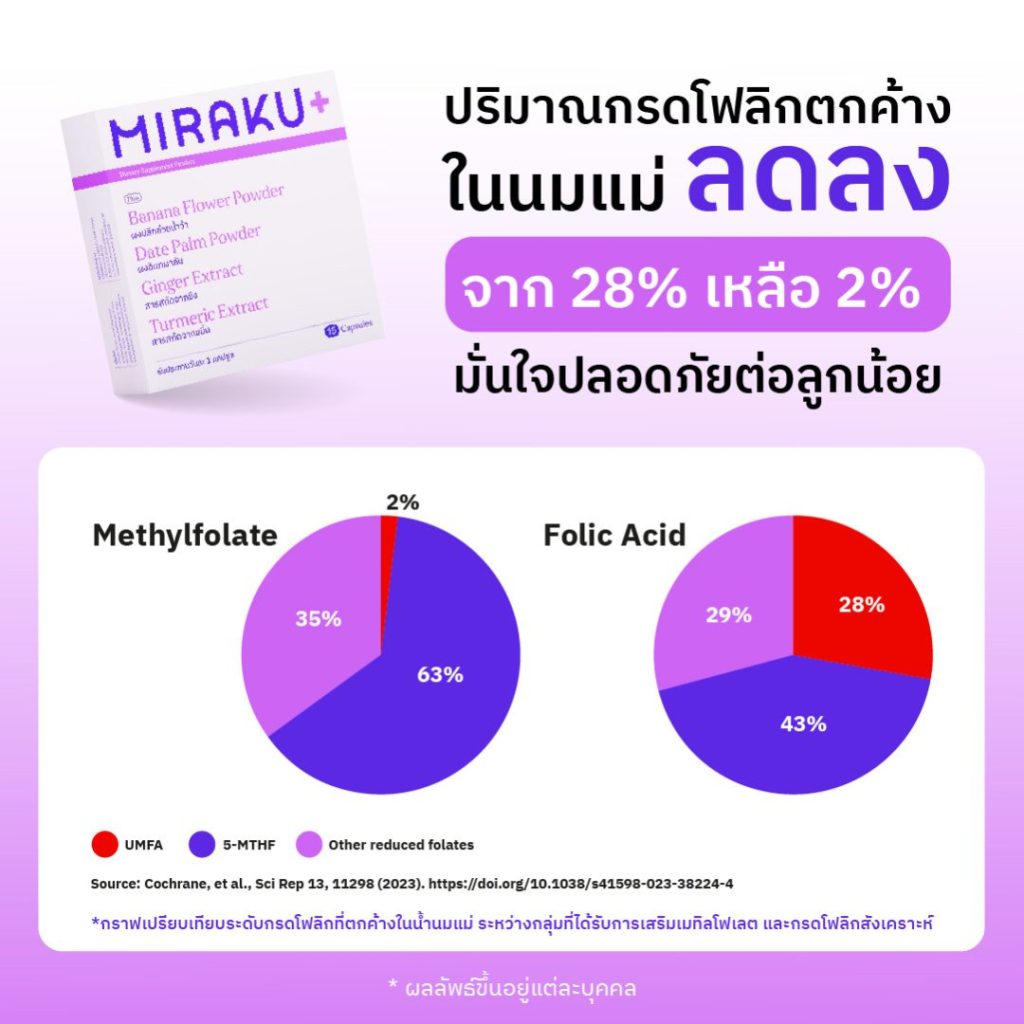
Although both folate and folic acid are essential nutrients that support a baby’s development—particularly in preventing brain and spinal cord defects—some people, especially those with the MTHFR mutation, may not be able to fully convert synthetic folic acid. This can lead to unwanted residue in the body and breast milk. Choosing methylfolate, the active form of folate that the body can absorb immediately, may therefore be a safer alternative.
That said, before taking any supplement, it is always recommended to consult a doctor or healthcare professional to ensure safety and suitability for each individual.
You can buy Miraku+ or learn more here.

Sources:
- Daily iron and folic acid supplementation during pregnancy, WHO
- MTHFR Gene Mutation, Healthline
- Folic Acid: Facts for Clinicians, CDC
- Folate (folic acid), Mayo Clinic
- Ethnogeographic prevalence and implications of the 677C>T and 1298A>C MTHFR polymorphisms in US primary care populations, National Library of Medicine
- Conception intake of folic acid among pregnant women who attend antenatal care clinic under the Universal Coverage Program, page 8, The Bureau of Reproductive Health, Department of Health, Ministry of Public Health, Thailand